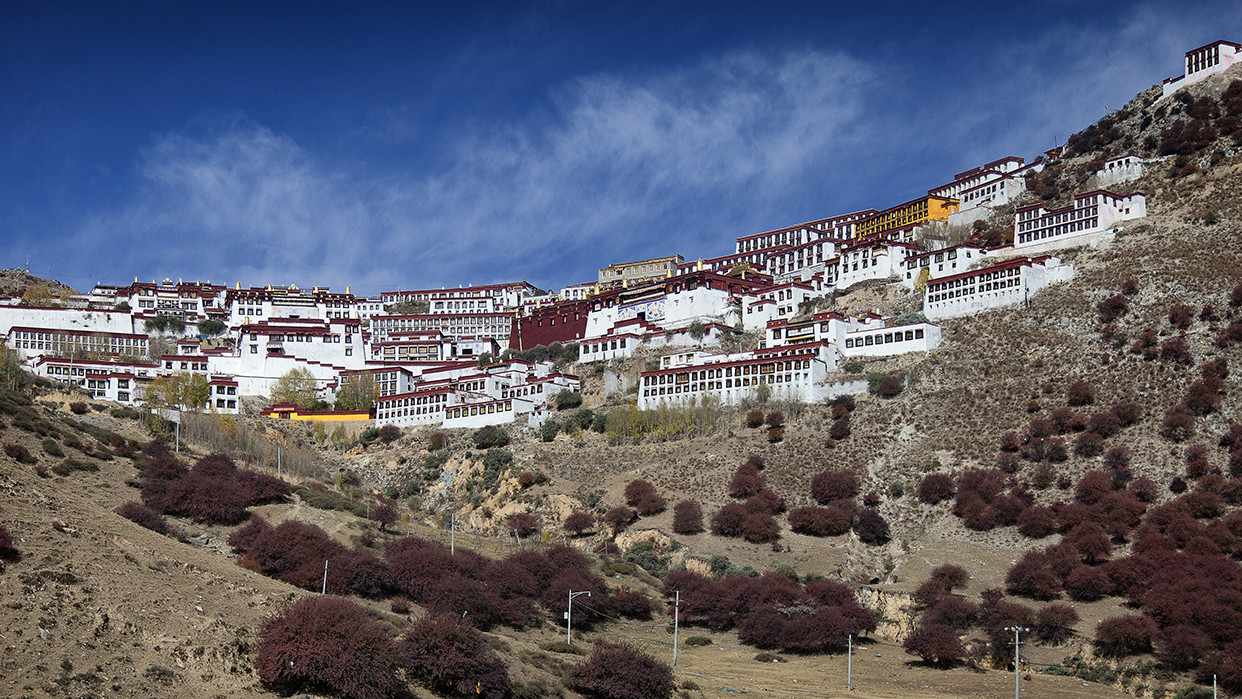
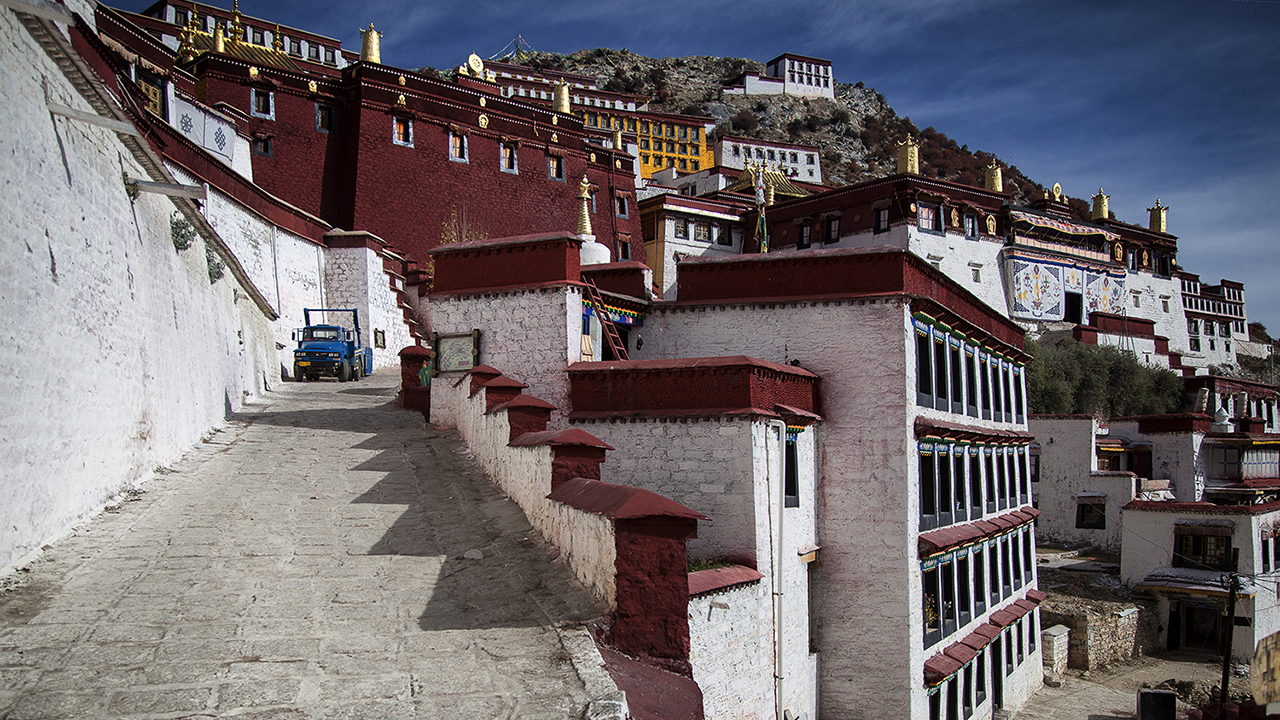
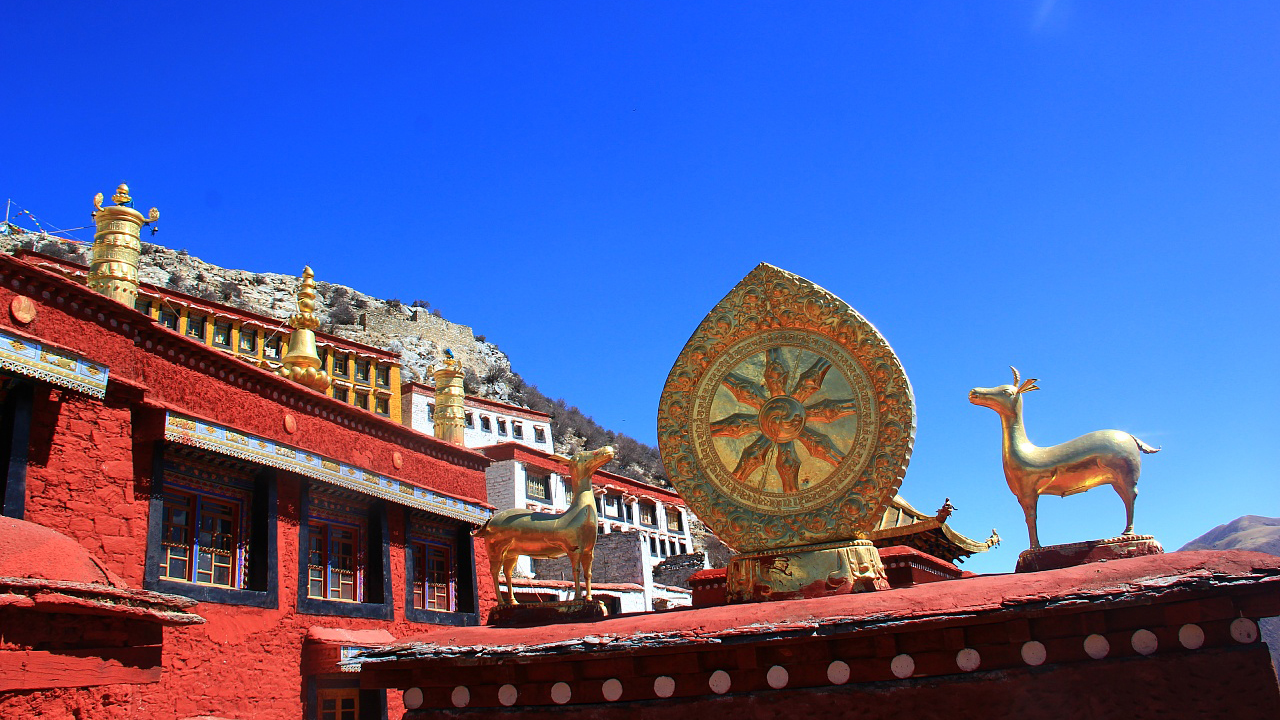
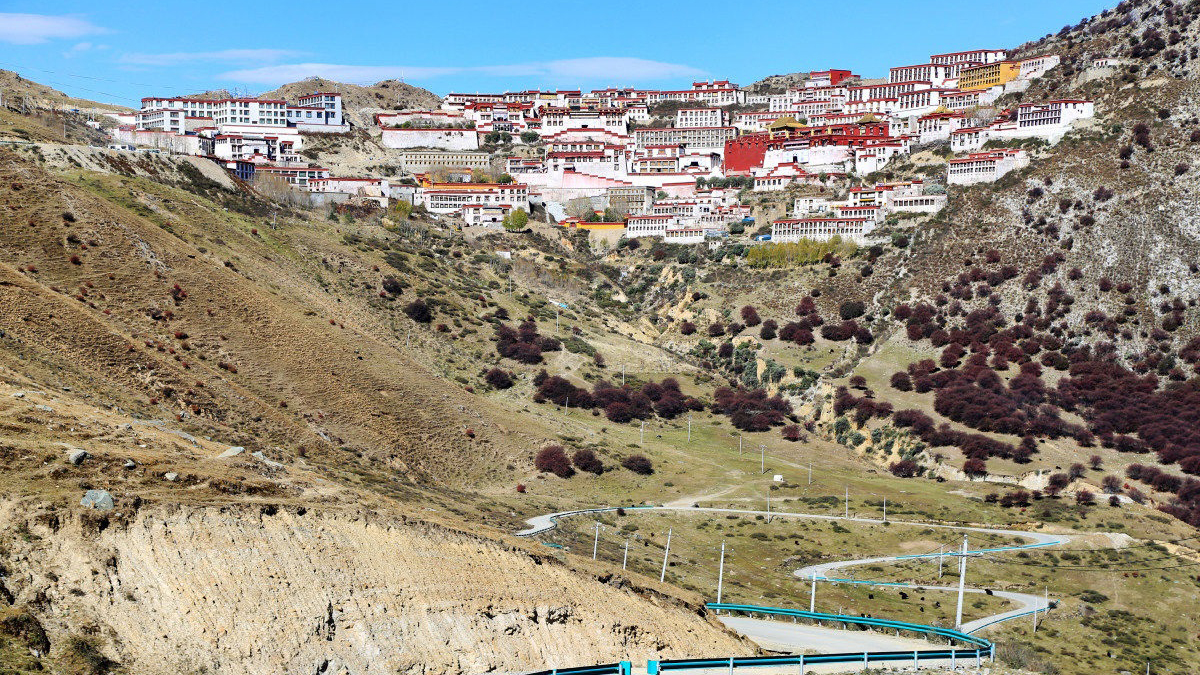
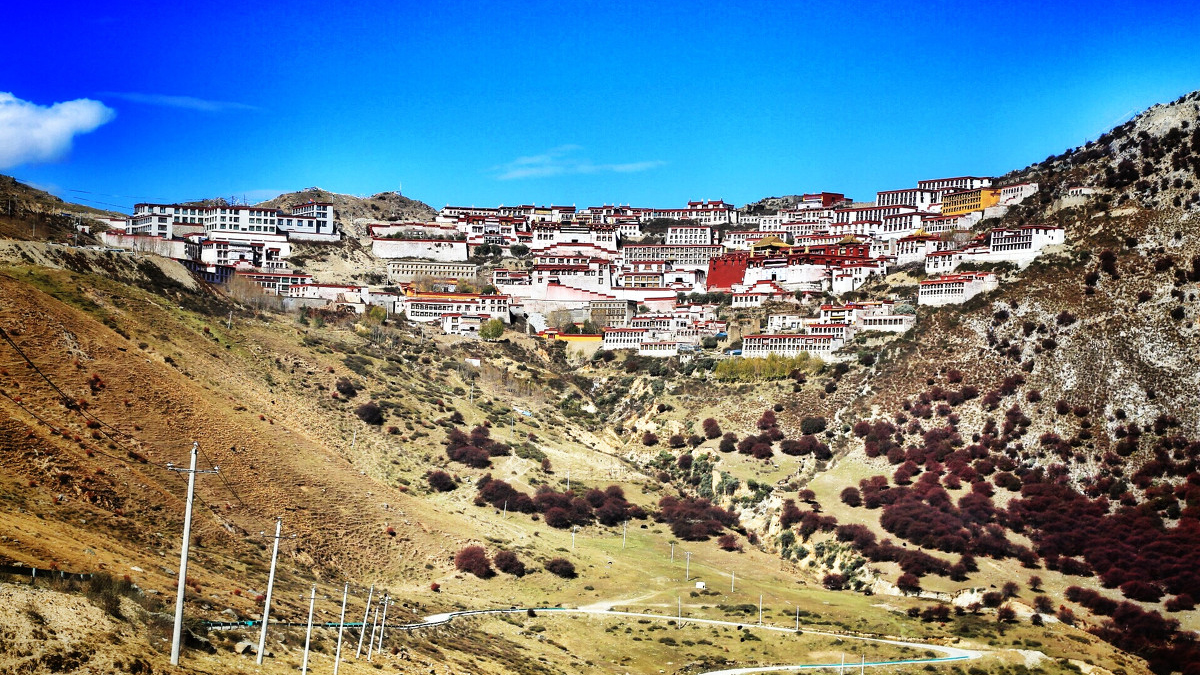
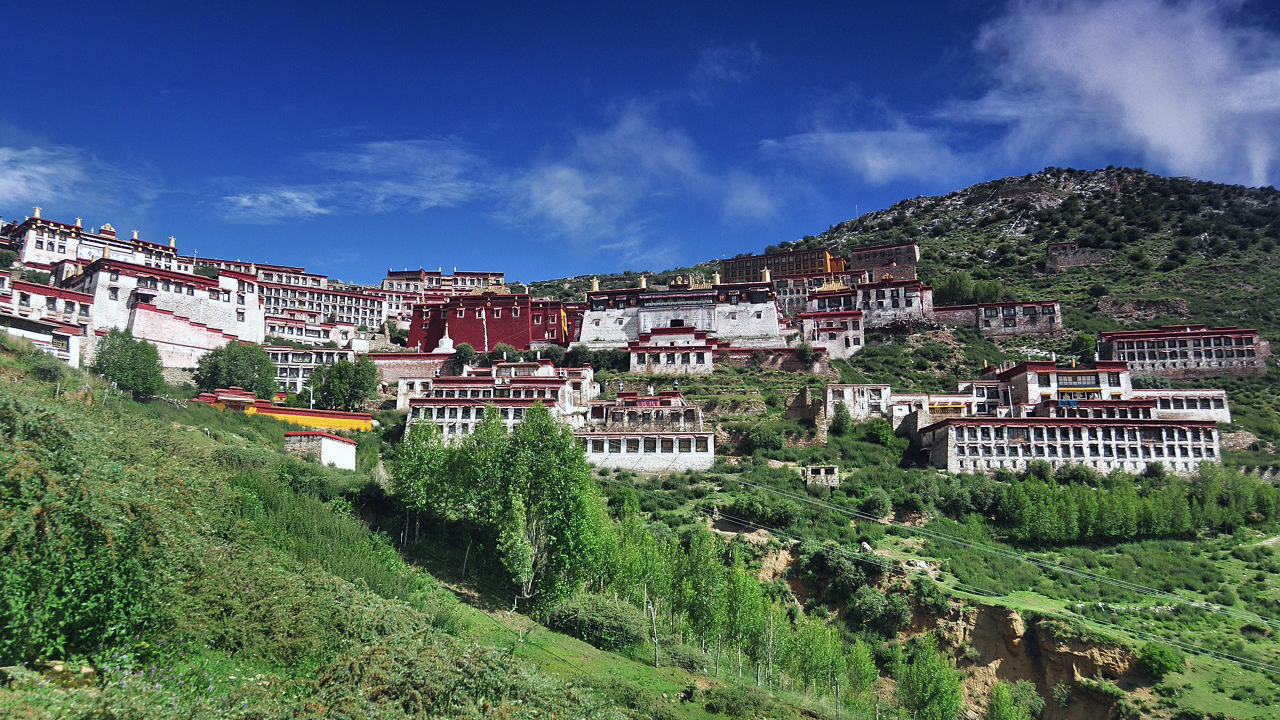
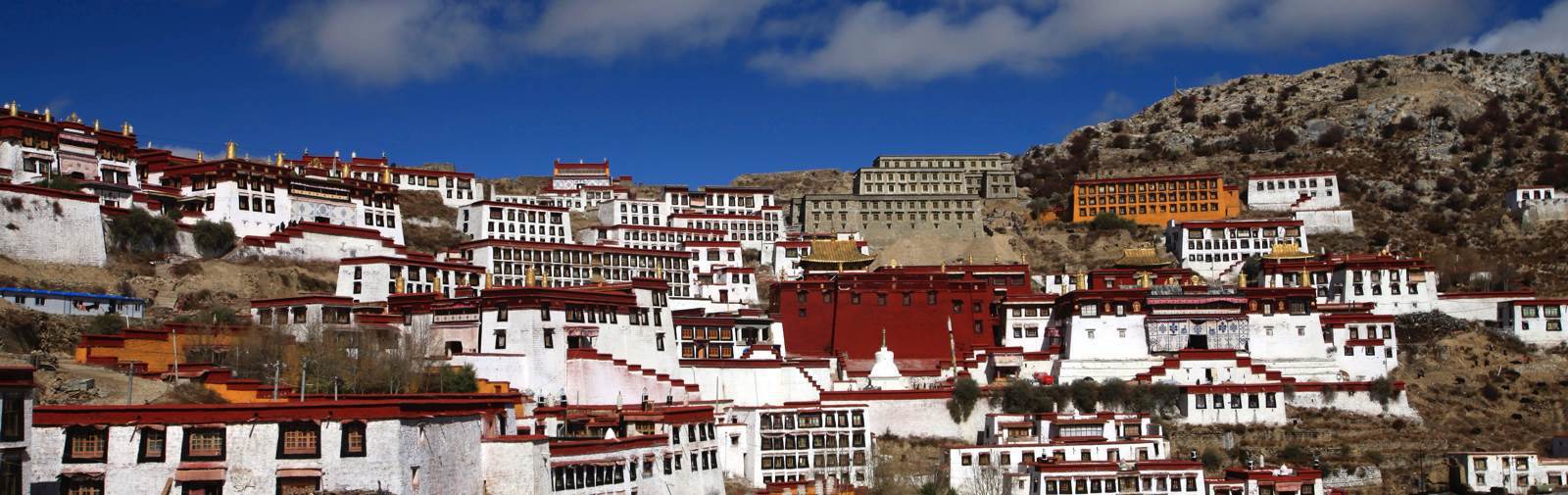
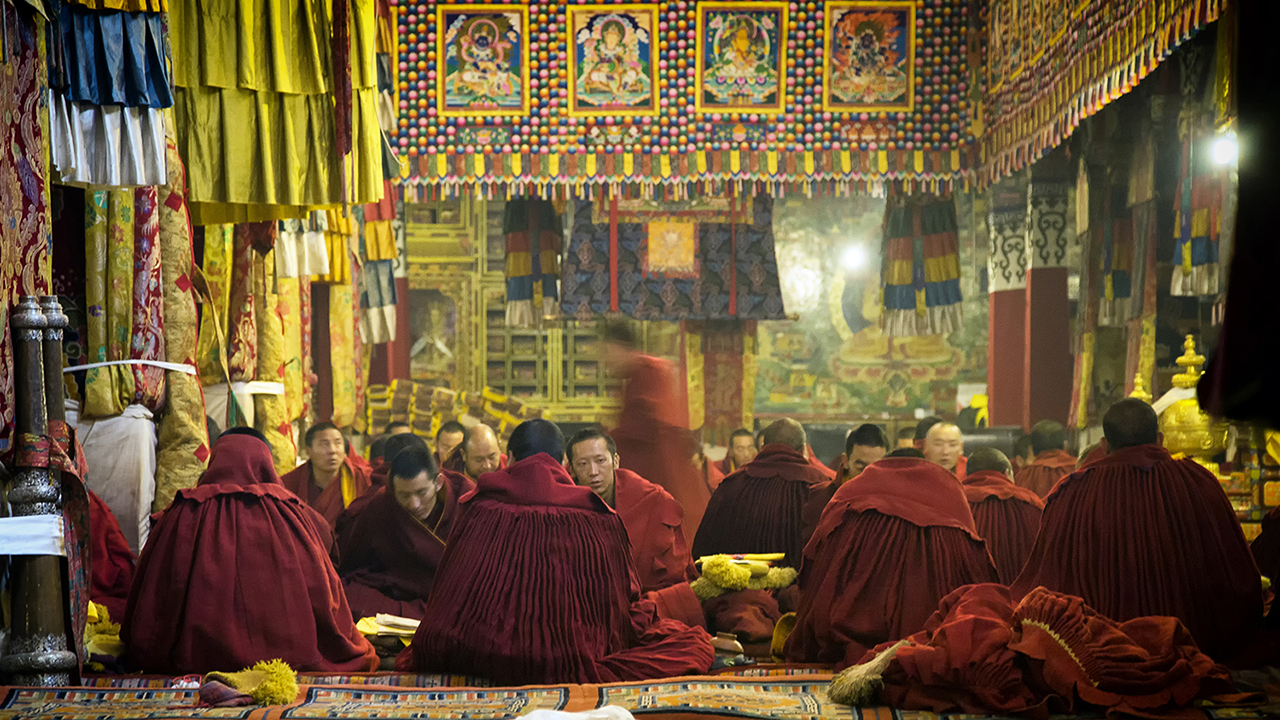
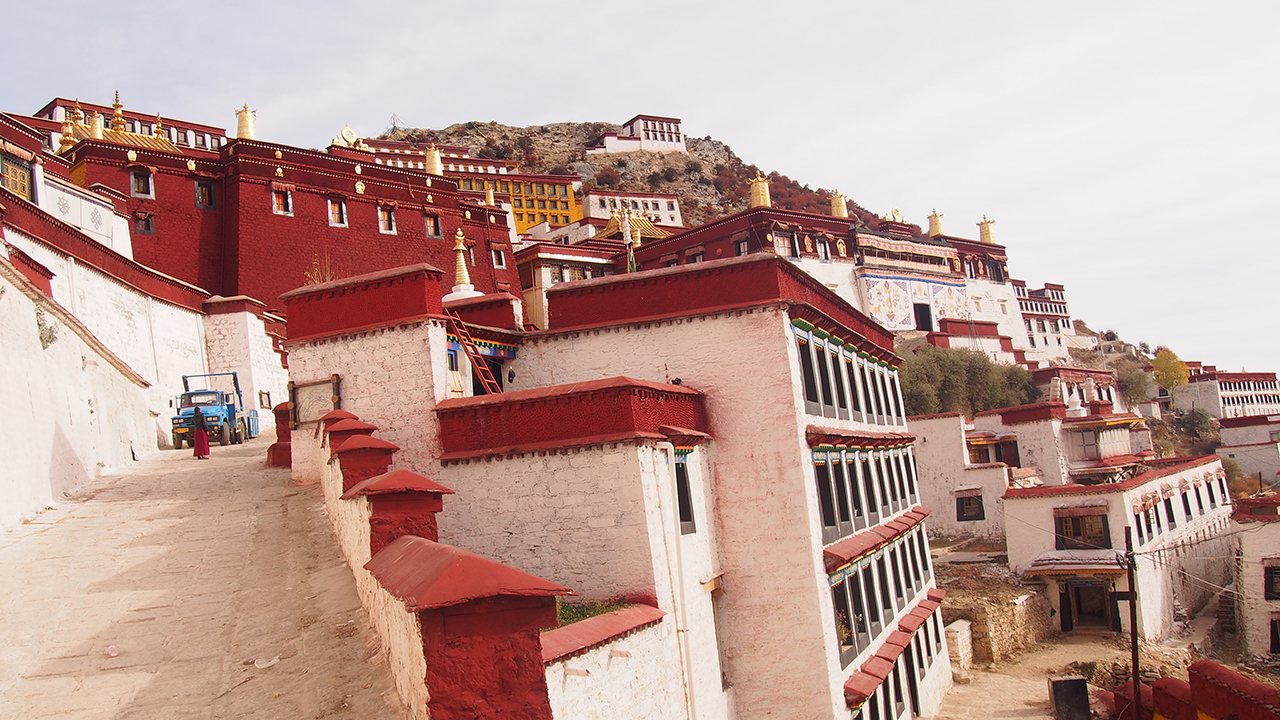
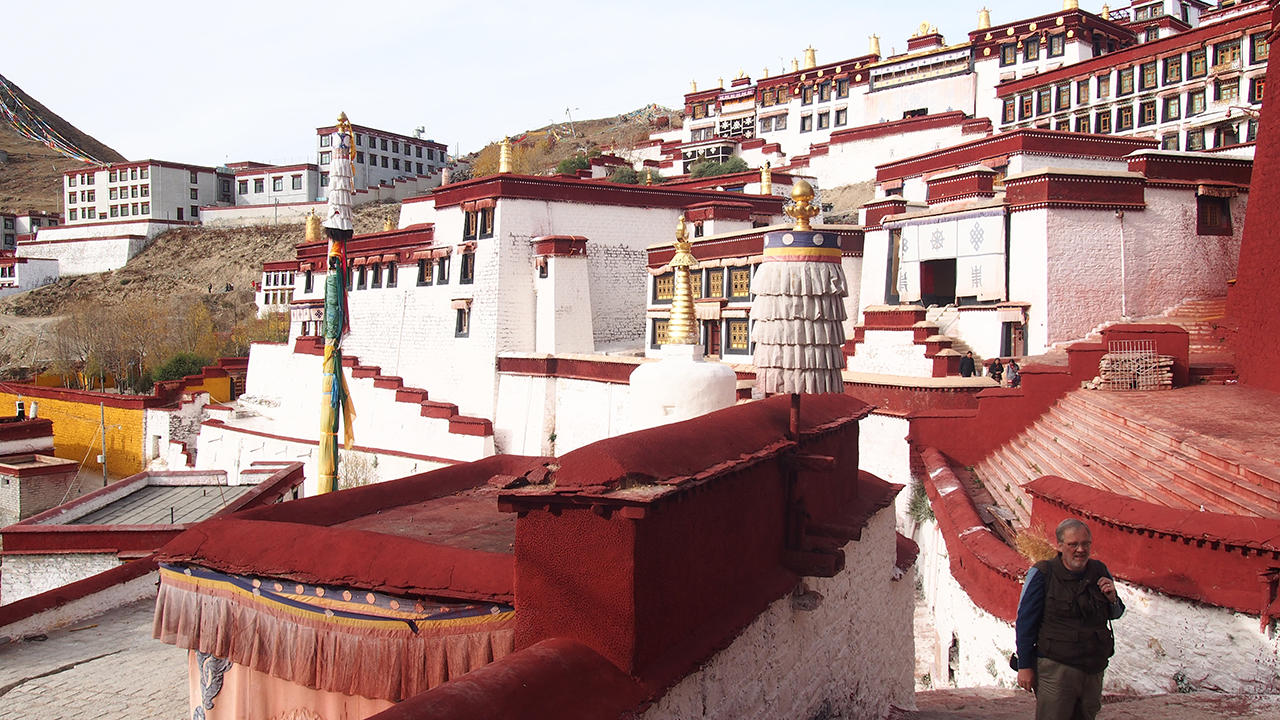
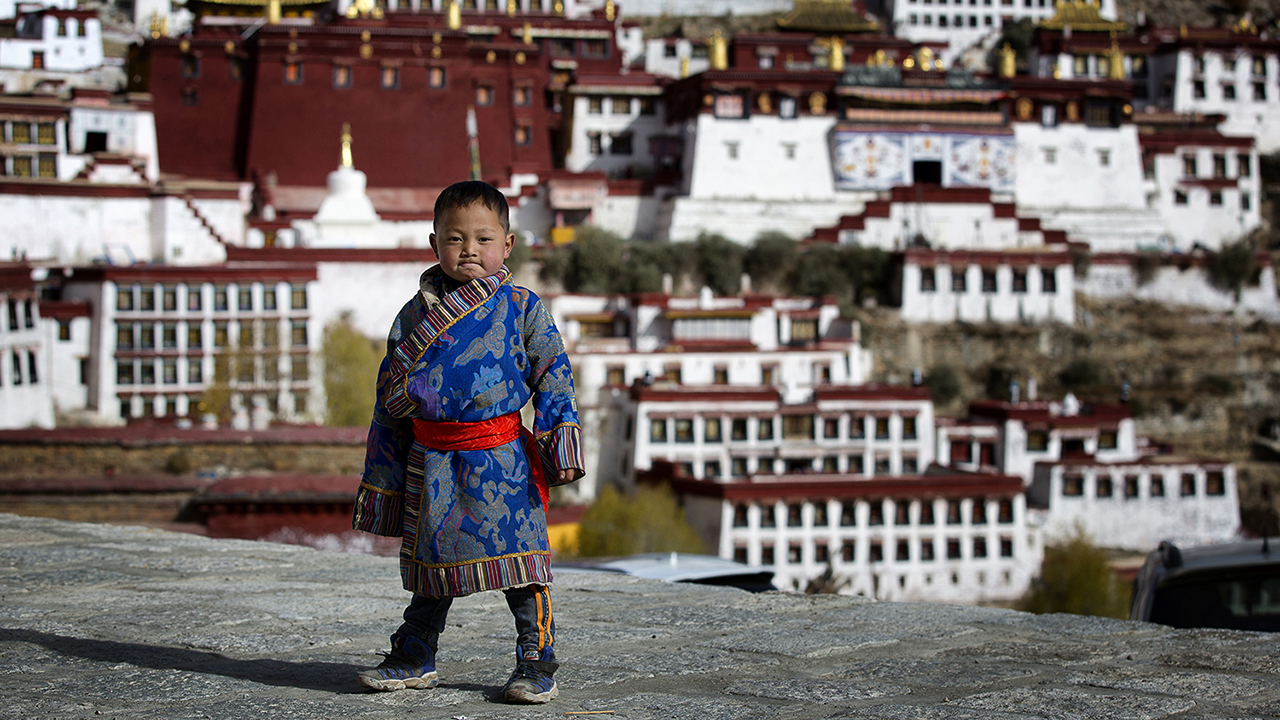
Ganden Monastery is one of the earliest and largest Buddhist monasteries in Tibet. With over 600 years of history for building in 1409 by Tsongkhapa, the founder of the Gelug Sect, it stands atop of the six famous temples of Gelugpa, and also known as one of the Three Great Temples, together with the Sera Monastery and the Drepung Monastery. In the meaning of happiness and contentedness in Tibetan, Ganden Monastery is the main dwelling of successive Gelug abbots and their tombs were built into pagodas for over 90 numbers. With an orderly architectural layout of standing Buddha halls, towering roofs, splendid stupas, Ganden Monastery is arranged well with vivid colors of black windows, white walls and the golden roofs, like a castle under the heaven. Besides, the kinds of architectural buildings and a large quantity of cultural relics and handicrafts are worth visiting. Along the winding twisty road up, you can appreciate the authentic holy land under the blue sky.
History
As the first Gelugpa Monastery, Ganden Monastery has an important role in Tibetan religious culture. It is the product of reformation movement practiced by Tsongkhapa in the early 15th century. With a high rank status in Tibet, there was a heyday for over 4000 monkslived in the monastery after the construction in 1409. In 1980, there was a thorough reconstruction for some major buildings, including the holy stupas of Tsongkhapa, scripture halls, Buddhist halls, etc.
The Founder & Gelug Sect
Tsongkhapa (1357-1419), the founder of Ganden Monastery, who was supposed to the reincarnation of Manjusri, born in Qinghai, and firstly contacted the Buddhism when he was three years old. After studying 9 years Buddhist doctrine for 9 years in Xia Qiong Temple, he left Qinghai to Tibet for further study in the year of his age of 16. In the later years, he learned from different sects’ monks and sucked up all the essential of the Buddha dharma. At the same time, he got more and more reputations in Tibet.
With the development of Tibetan Buddhism, the ill disciplines happened among the aspects of intellectual, religious and monastic in Kagyu, Sakya and more sects. Disappointed at those undesirable phenomena, Tsongkhapa reined his disciples and followers into a strict new order- the Gelug sect was established with an austerity of monastic life and emphasized the primacy of philosophical study. In order to distinguish from other sects, he and his followers wear Yellow peach shaped hat. Hence, the Gelug sect is also called the Yellow Hat sect. In 1409, the Ganden Monastery, as the first Gelug Monastery, was built near Lhasa and Tsongkhapa was the first abbot of Ganden Monastery.How to Get
Comparing to some other attractions in Lhasa, Ganden Monastery is a bit far from city area. About 50 km away north of Lhasa, it is located in the Dazi County, at the top of Wangbur Mountain with 3800 meters above the sea level.
Usually, it takes about 1.5 hours to get to Ganden Monastery from the downtown area of Ganden Monastery by driving. The road to Ganden Monastery is rather winding but it offers great view. After Ganden Monastery, you could extend your tour for more sightseeings, such as the Drak Yerpa nearby (about 19 km), a temple built along the cliff is one of the four chakra places in Tibet.
Insider tips
1. Take a visit to Tri Thok Khang. It is a very holy place where Tsongkhapa lived and died and also a place where successive Ganden Tripas were taken as their living room. With the construction in 1409 and enlargement in 1720, Tri Thok Khang was eventually redecorated with the gilded roof during the 7th Dalai Period. In addition, lots of Tsongkhapa and successive Ganden Tripas' private things, cultural relics as well as handcrafts since the Ming Dynasty can also be explored in this house.
2. Don't miss Yangbajian Sutra Hall where Tsongkhapa's flesh remains were preserved. On October 25 1420, Tsongkhapa passed into Parinirvana in Tri Thok Khang, and his disciple Darmarinchen constructed this palace to preserve his flesh remains as well as the spirit. During the 10th Ganden Tripa, the spirit tower was recovered with gold all over instead of the original silver skin and precious pieces of jewelry. Till the 13th Dalai Lama, the whole palace was repaired to be much grander.
3. Pay a visit to Tsochin Hall to see the essence of the Monastery as well as its historical changes.